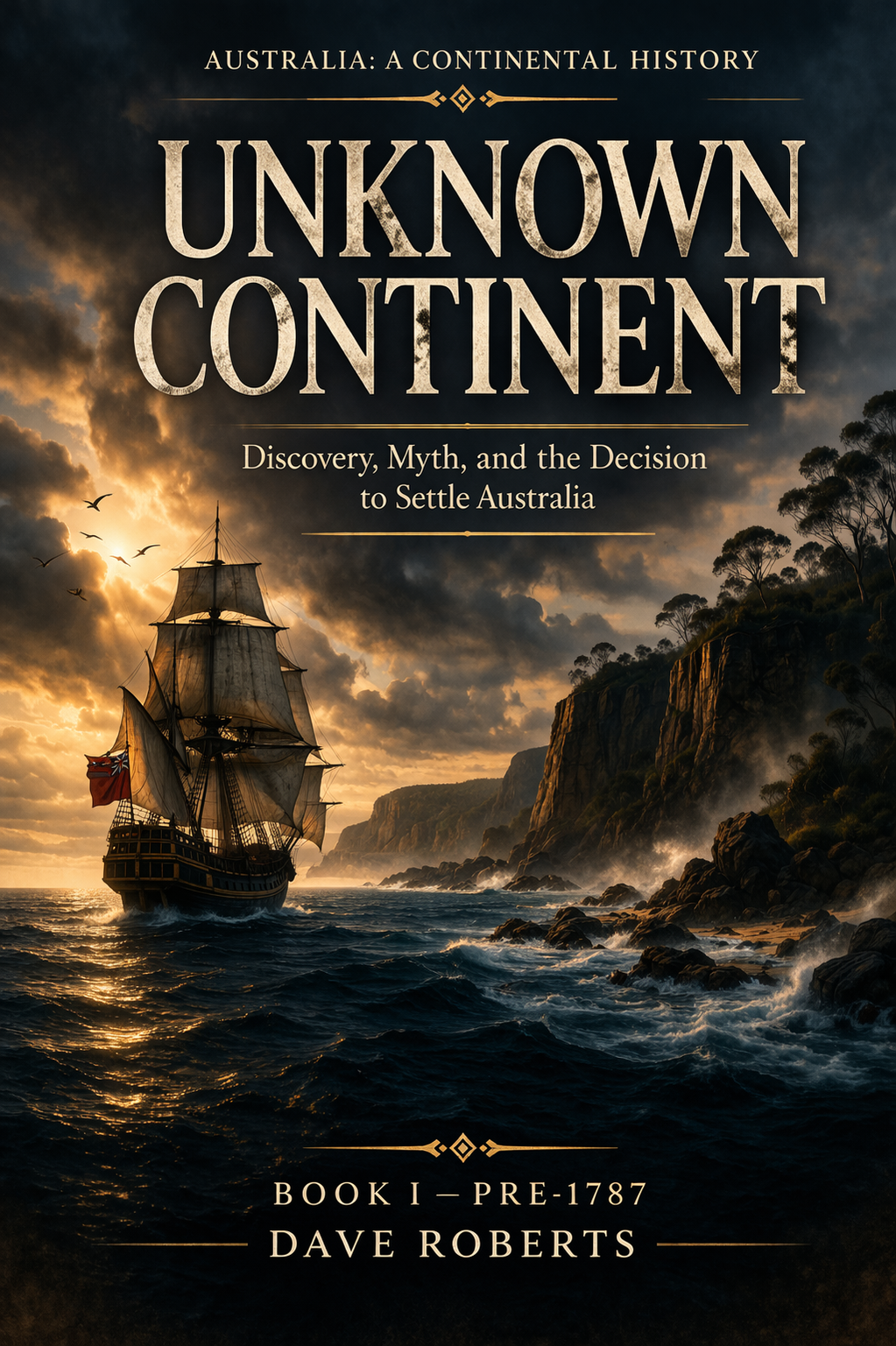
THE UNKNOWN CONTINENT (PRE-1787)
Before settlement, before maps were complete, before Australia existed in any structured sense—it was an idea.
The Unknown Continent explores the period before 1787, when Australia remained largely outside European understanding, yet increasingly within imperial attention. From ancient concepts of Terra Australis to the fragmented Dutch encounters along the western and northern coasts, the continent existed as a presence without meaning—mapped, but not yet understood.
This volume traces the shift from myth to recognition. It examines the voyages that revealed the coastline, the limitations of early exploration, and the reasons why early European powers did not immediately act. It follows the turning point of James Cook’s 1770 voyage along the eastern coast, and the observations that transformed the continent from unknown territory into strategic opportunity.
By the late eighteenth century, pressures within the British Empire converged—geopolitical rivalry, expanding knowledge of the Pacific, and the need for a new penal colony. Australia was no longer distant or abstract. It became a decision.
This is the beginning of the system.
available on Amazon
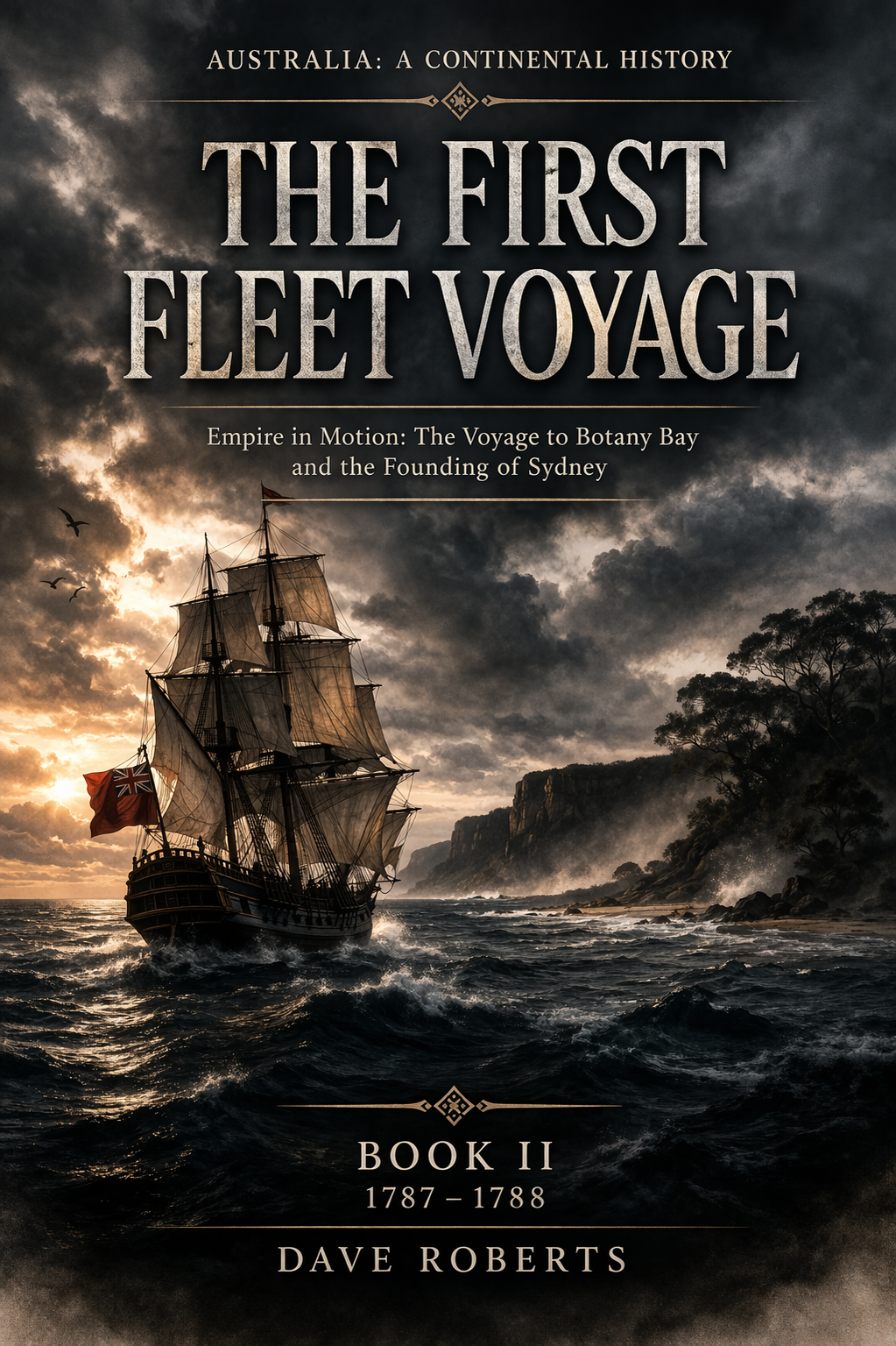
THE FIRST FLEET VOYAGE (1787–1788)
In 1787, the decision became action.
The First Fleet Voyage follows the movement that transformed intention into reality—the departure of eleven ships carrying convicts, marines, and officials across half the world to establish a permanent British presence in Australia.
This was not simply transportation. It was the extension of authority across distance.
The voyage itself was a controlled system under constant pressure. Discipline, supply, navigation, and survival had to be maintained over months at sea, with little margin for failure. Every element—from the organisation of the fleet to the management of those on board—reflected the structure required to project power beyond the known world.
Upon arrival in 1788, that structure was tested immediately. The selection of Botany Bay proved unsuitable, forcing a rapid relocation to Port Jackson. What followed was not establishment, but improvisation under constraint.
This volume captures the transition from planning to execution—the moment a distant decision became a physical presence on the continent.
available on Amazon
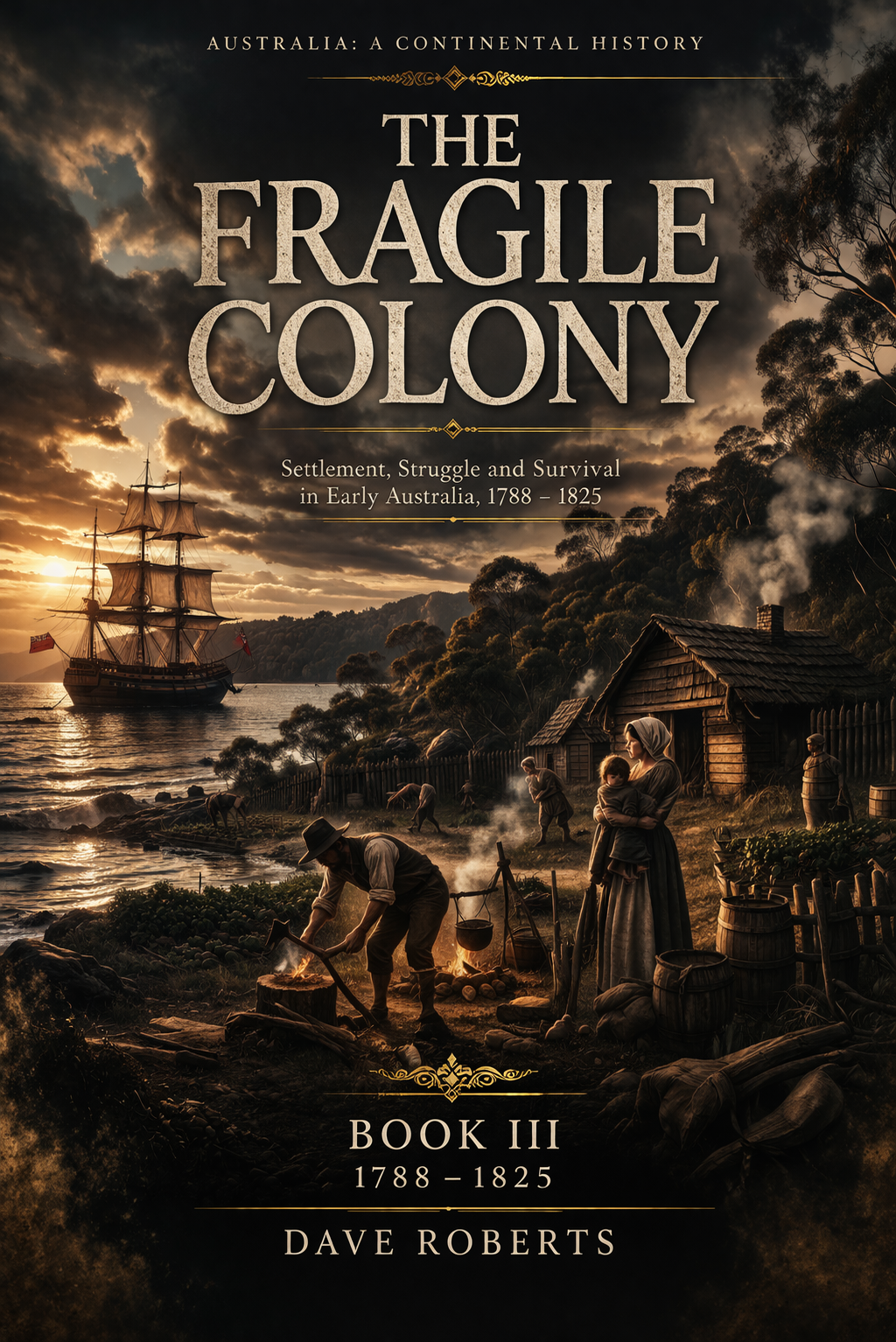
THE FRAGILE COLONY (1788–1825)
Establishment did not bring stability.
The Fragile Colony examines the early decades following settlement, when the British presence in Australia remained uncertain, exposed, and under constant pressure. Authority had been established, but it was not yet secure.
Isolation defined the colony. Supply lines stretched across the globe, resources were limited, and survival depended on maintaining order in an environment that resisted control. Governance was strict, discipline was enforced, and the structure imposed at arrival was tested repeatedly by conditions it had not fully anticipated.
Expansion in this period was cautious and constrained. Knowledge of the land remained limited, and movement beyond the immediate coastal settlements carried risk. At the same time, resistance—both from within the convict population and from Indigenous groups—exposed the limits of authority and the fragility of the system itself.
Gradually, the colony began to stabilise. Agricultural production improved, infrastructure developed, and the foundations of a more permanent society took shape. Yet this stability remained conditional, dependent on the continued balance between control, adaptation, and survival.
This volume captures the phase in which the colony endured—uncertain, contested, and not yet secure.
available on Amazon
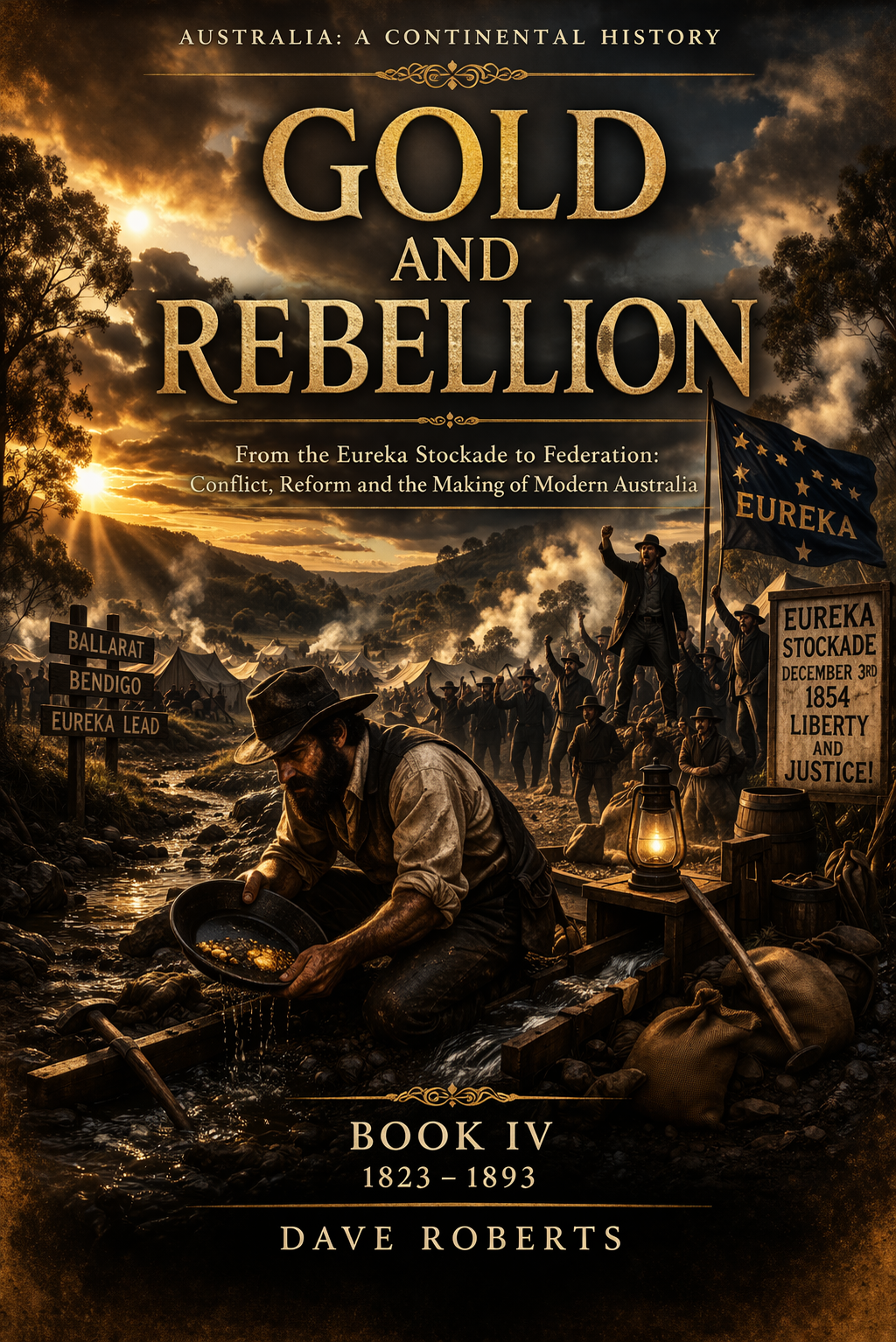
GOLD AND REBELLION (1823–1893)
Expansion brought disruption.
Gold and Rebellion explores the period when the Australian colonies were transformed by rapid growth, driven by the discovery of gold and the movement of people across the continent. What had been controlled expansion became accelerated and unstable.
Authority came under pressure as populations surged and systems struggled to keep pace. Tensions emerged between governance and opportunity, leading to moments of open resistance—most notably the Eureka Rebellion.
By the end of the nineteenth century, the colonies had expanded in scale and complexity, forcing a shift in how they were governed.
This is the phase where growth challenged control—and forced it to evolve.
This volume captures the phase where growth destabilised control—and forced it to change.
available on Amazon
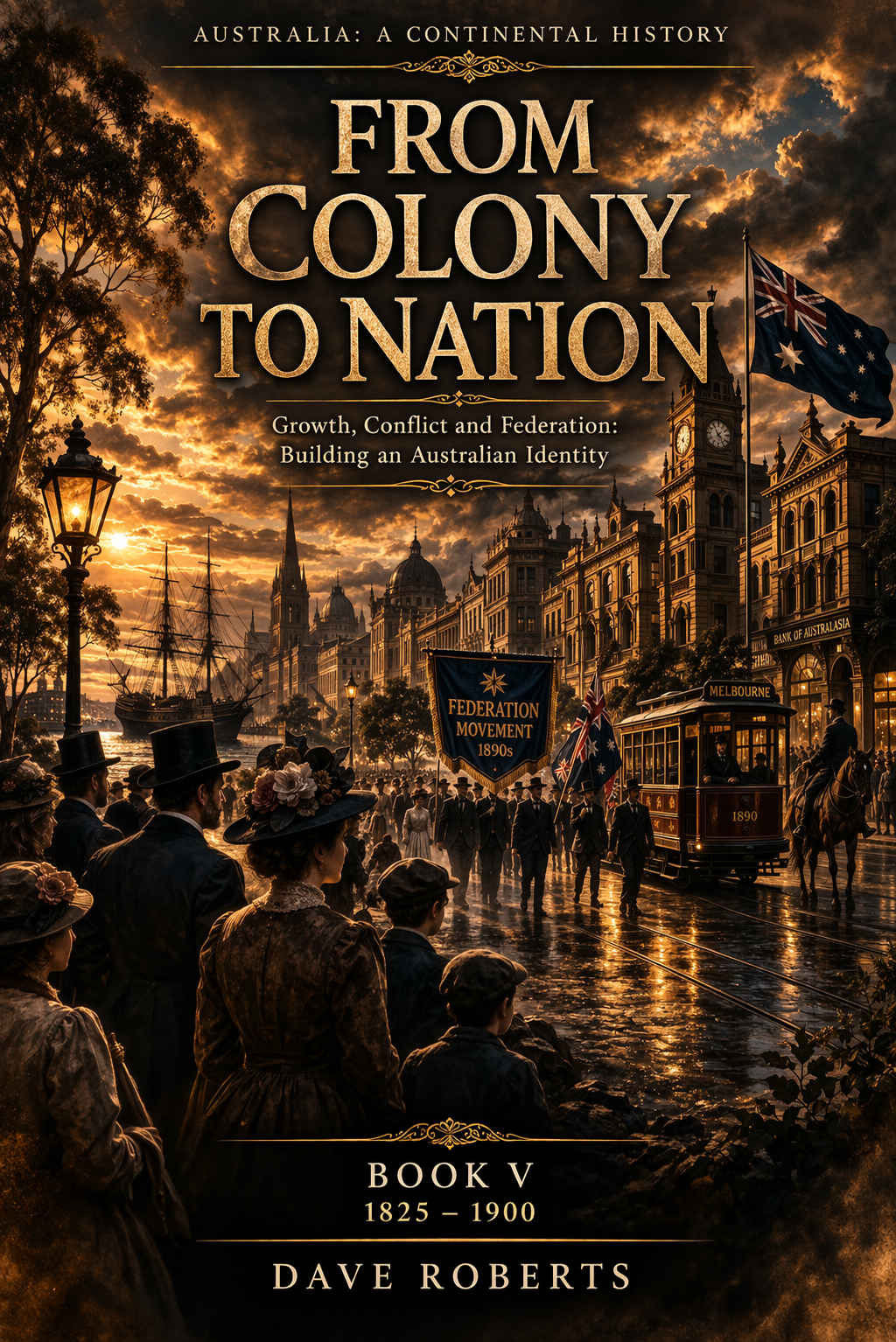
FROM COLONY TO NATION (1825–1900)
Structure moved toward unity.
From Colony to Nation explores the period in which the Australian colonies transitioned from separate entities into a coordinated system. Expansion continued, infrastructure connected regions, and economic growth strengthened internal development.
Authority began to shift. What had been directed from the imperial centre increasingly moved toward local control, as political systems evolved and the foundations of federation emerged.
By 1900, the colonies were no longer isolated or fragmented.
They were aligned.
This volume captures the transition from expansion to consolidation—the point at which a continent moved toward becoming a nation.
available on Amazon
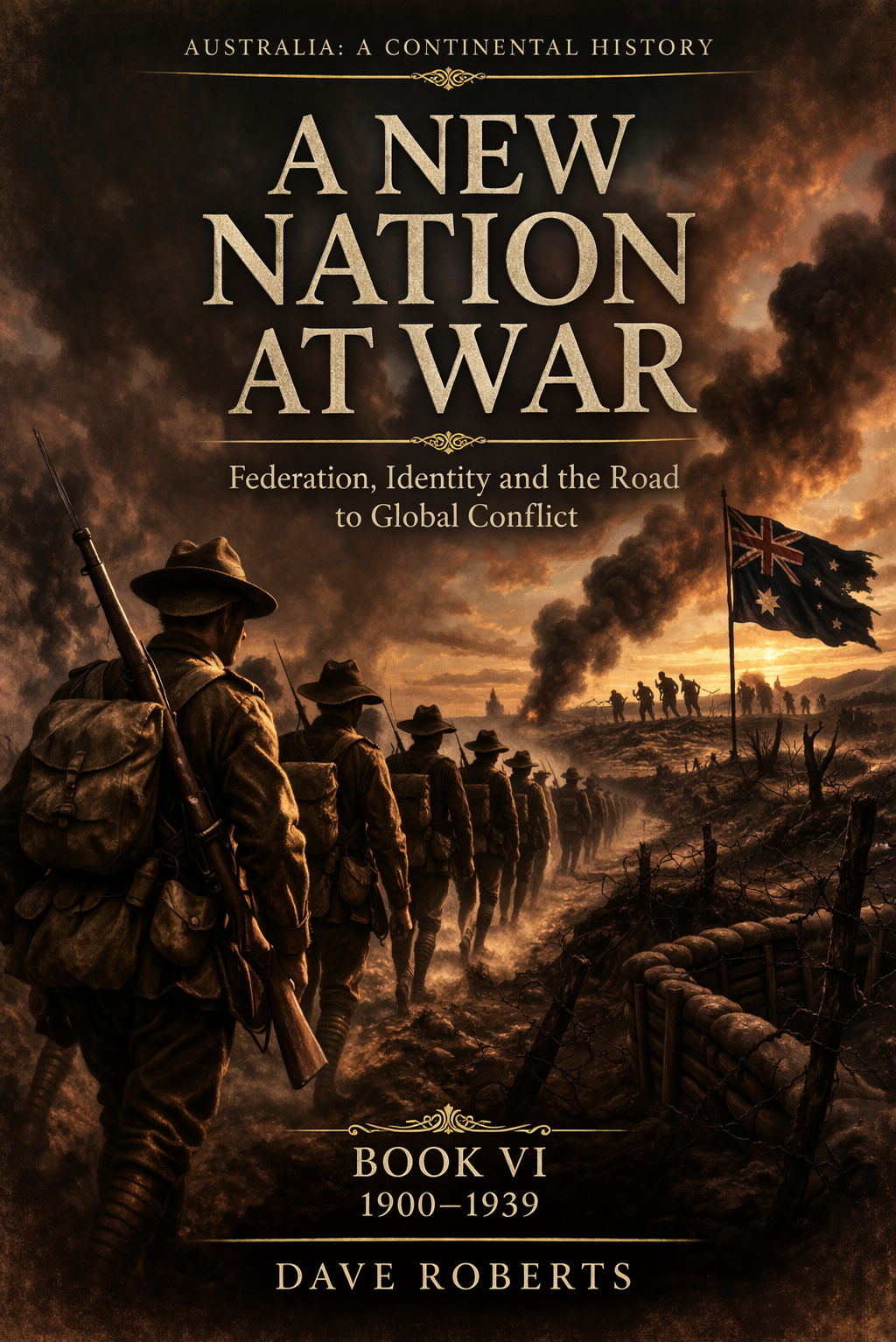
A NEW NATION AT WAR (1900–1939)
Nationhood brought new demands.
A New Nation at War examines the early decades following federation, as Australia moved from colonial structure to national identity. Authority was consolidated, institutions were formed, and the country began to define its role beyond its borders.
Global conflict tested that structure. Participation in the World War I reshaped identity, linking national development to international engagement.
By the interwar years, Australia had established itself as a nation—but one still tied to external systems.
This volume captures the emergence of national structure under the pressure of global war.
available on Amazon
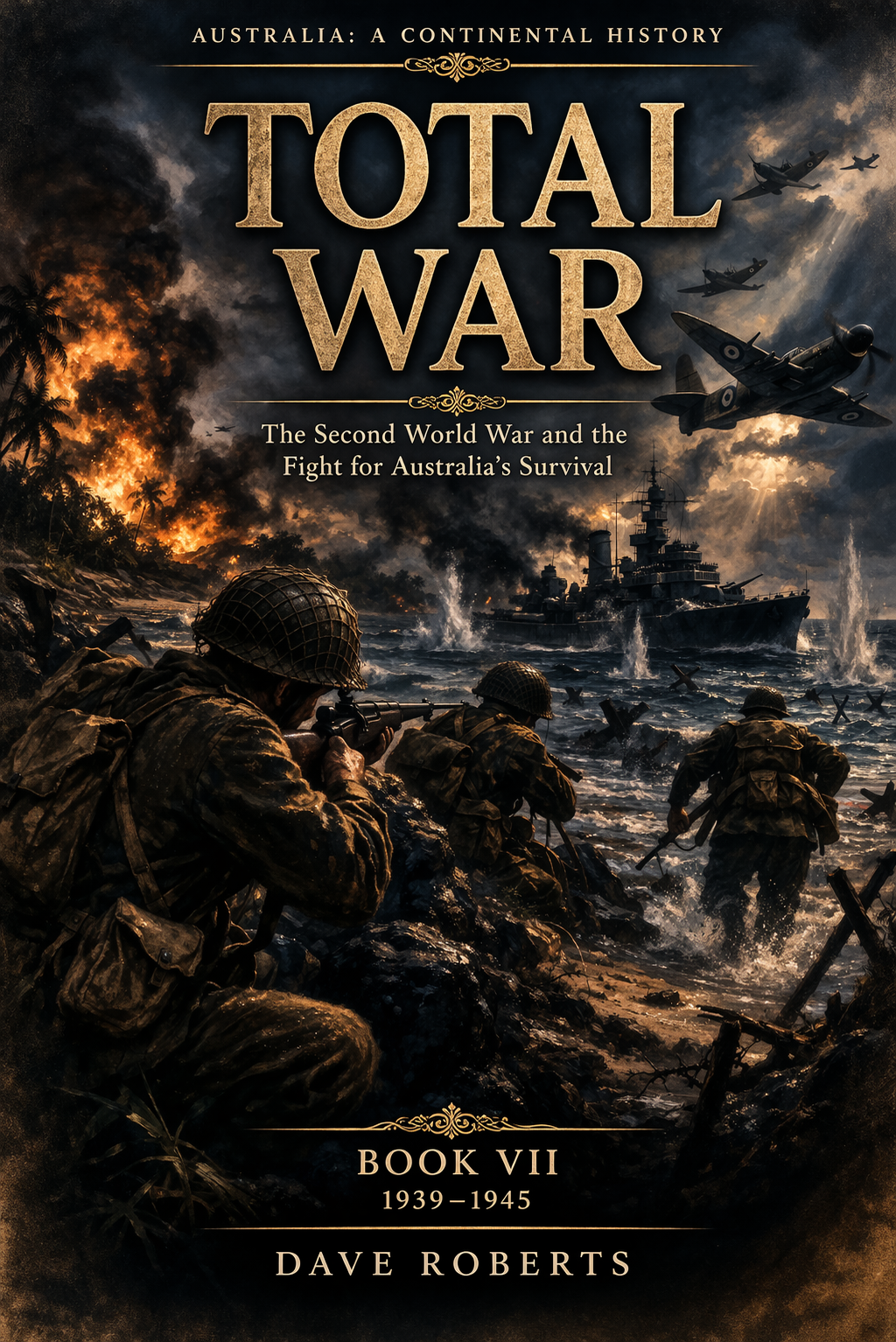
TOTAL WAR (1939–1945)
War redefined the system.
Total War explores the impact of the World War II on Australia as conflict moved closer to its shores. Authority intensified, resources were mobilised, and society was reorganised around survival and defence.
The war accelerated change. Strategic dependence shifted, alliances were redefined, and Australia’s position in the world was fundamentally altered.
This volume captures the moment external threat forced internal transformation.
available on Amazon
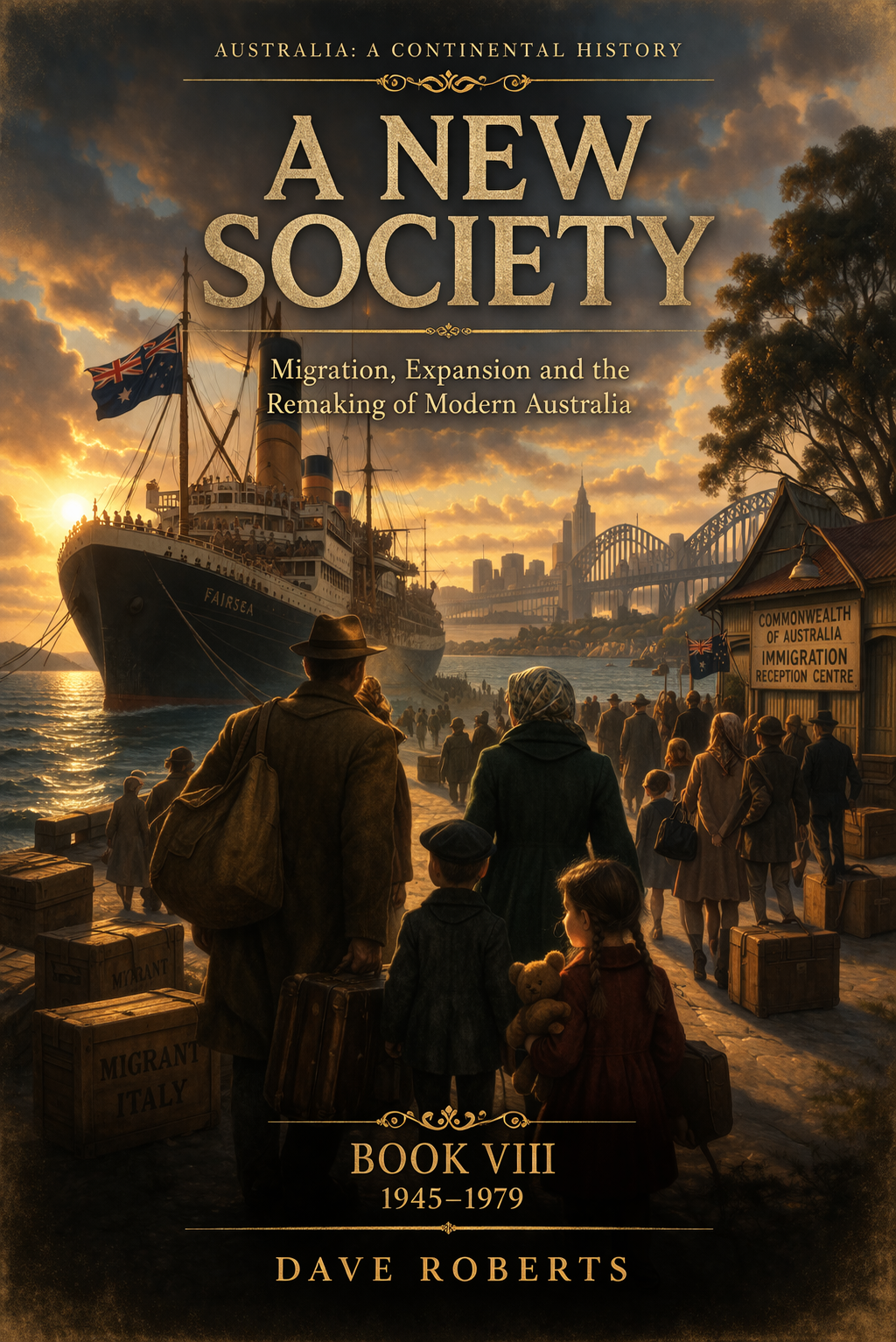
A NEW SOCIETY (1945–1979)
Peace brought transformation.
A New Society examines the post-war period, as Australia expanded rapidly through migration, economic growth, and social change. The structure of the nation evolved, becoming more diverse, more connected, and more complex.
Authority adapted to new realities, balancing development with reform, while expansion reshaped both population and identity.
By the late twentieth century, Australia had been remade.
This volume captures the shift from war-driven unity to societal transformation.
available on Amazon
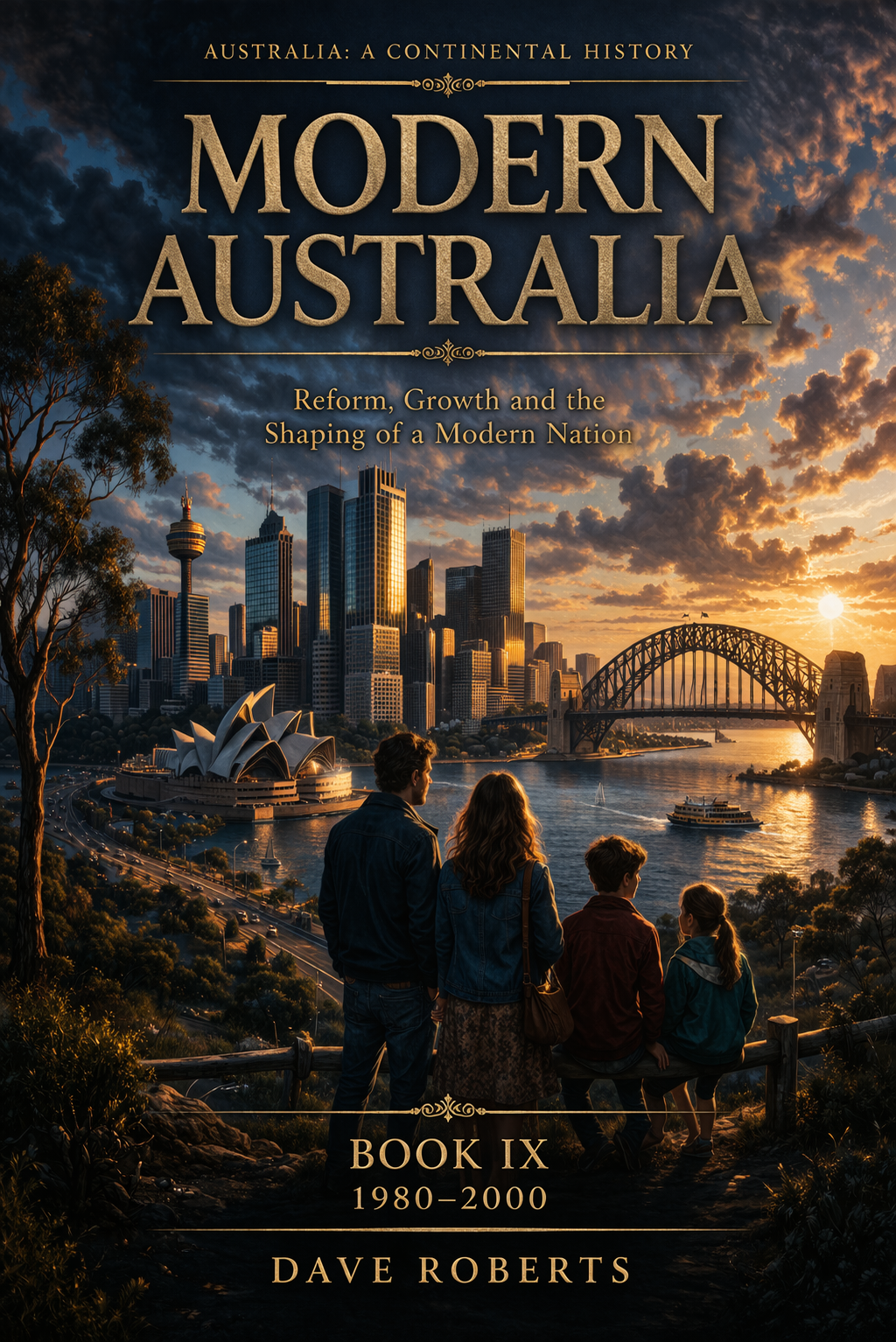
MODERN AUSTRALIA (1980–2000)
Integration changed the system.
Modern Australia explores the late twentieth century, as economic reform, globalisation, and technological advancement reshaped the nation. Authority adjusted to a more open and competitive environment, while expansion took new forms through finance, trade, and connectivity.
The country became increasingly embedded in global systems, reducing isolation but increasing exposure to external forces.
This volume captures the transition from national development to global integration.
available on Amazon
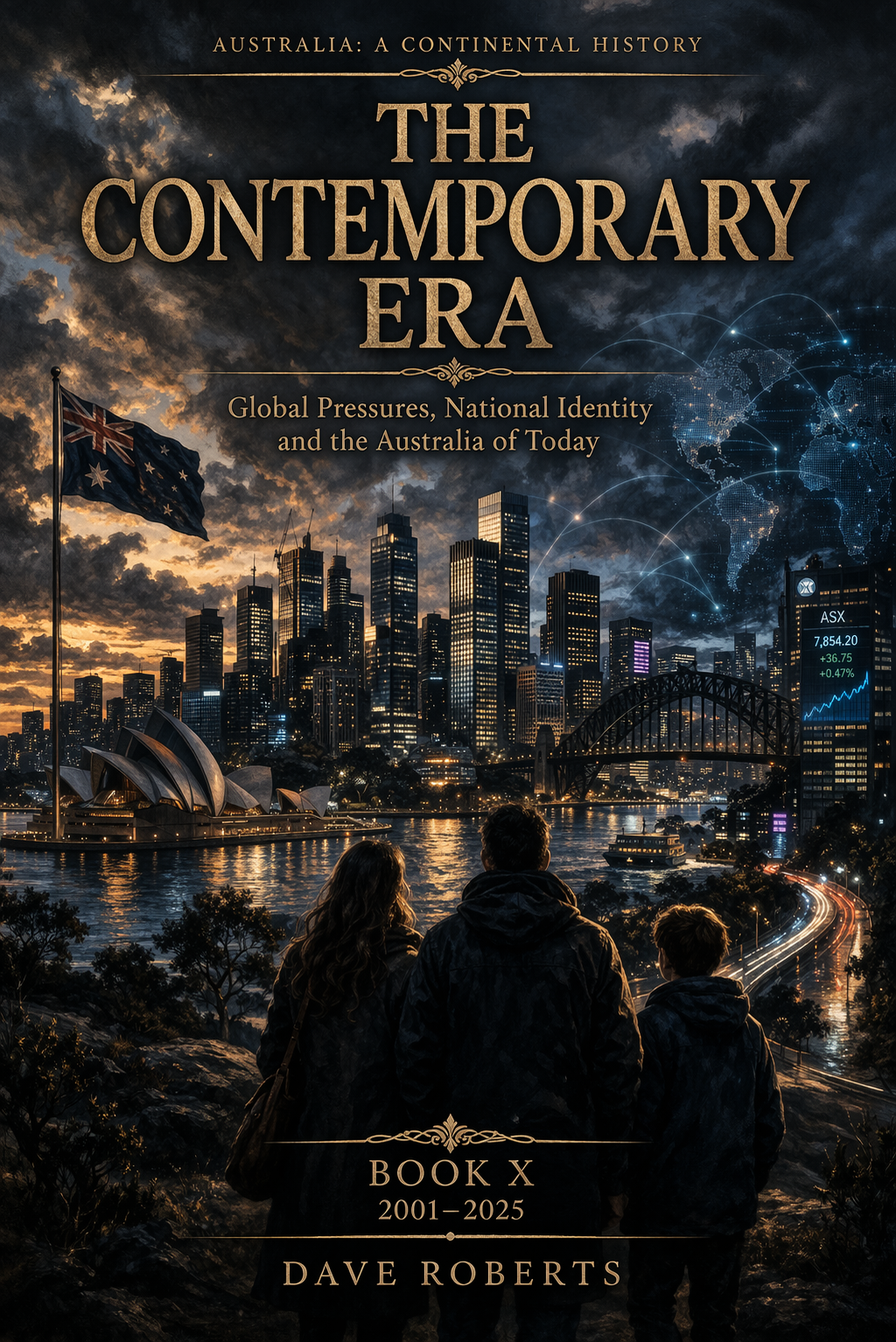
THE CONTEMPORARY ERA (2001–2025)
Pressure defines the present.
The Contemporary Era examines the early twenty-first century, where global instability, technological change, and shifting power structures place new demands on the nation. Authority operates within increasingly complex systems, while expansion continues through digital, economic, and strategic domains.
At the same time, resistance—political, social, and structural—reveals the limits of those systems.
This volume captures the present as an ongoing process, not a completed state.
available on Amazon
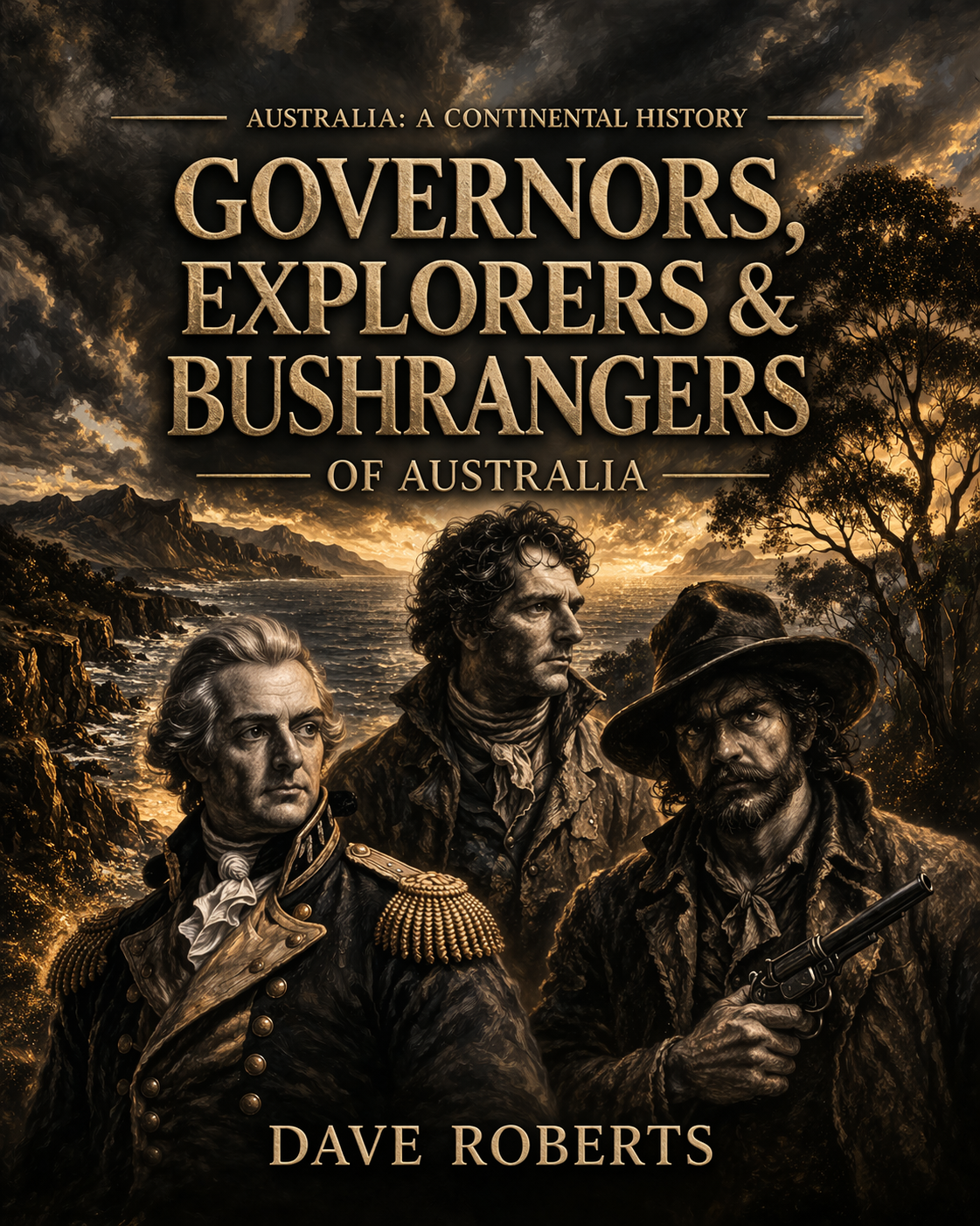
GOVERNORS, EXPLORERS & BUSHRANGERS
Structure was shaped by force.
Governors, Explorers & Bushrangers examines the early development of Australia through the individuals who operated within—and against—the system. Authority imposed control, exploration extended reach, and resistance challenged both.
Governors established order under fragile conditions, explorers moved beyond the known boundaries of the continent, and bushrangers exposed the limits of enforcement within an expanding and often unstable environment.
These roles did not exist independently. They interacted, conflicted, and evolved together, forming the underlying structure that defined early Australia.
This volume captures the forces that shaped the system before it stabilised.
available on Amazon